
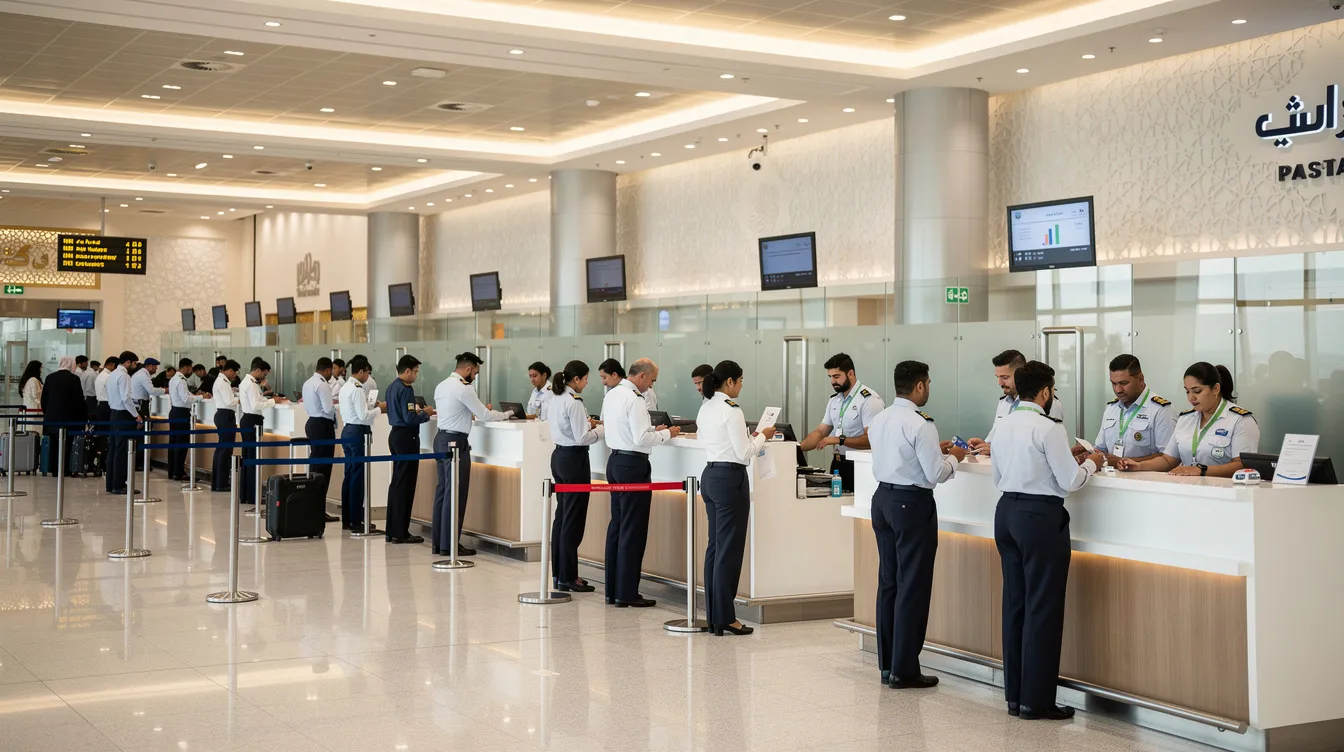
The Executive Council of Sharjah adopted a decision on September 22, 2026, to hire 150 new passport control officers at Sharjah International Airport (SIA). The hiring is proceeding in three phases, with the first starting in October 2026. This move addresses terminal congestion and is part of a broader employment plan for 3,000 jobs for UAE nationals in government institutions during 2026.
The decision responds to the airport's year-on-year growth in passenger traffic. An expansion project worth 2.4 billion dirhams, divided into 18 packages, is underway to raise the airport's annual capacity from the current eight million to 25 million passengers by mid-2027. The new officers are expected to ensure smooth passenger flow and maintain service levels as traffic volume grows.
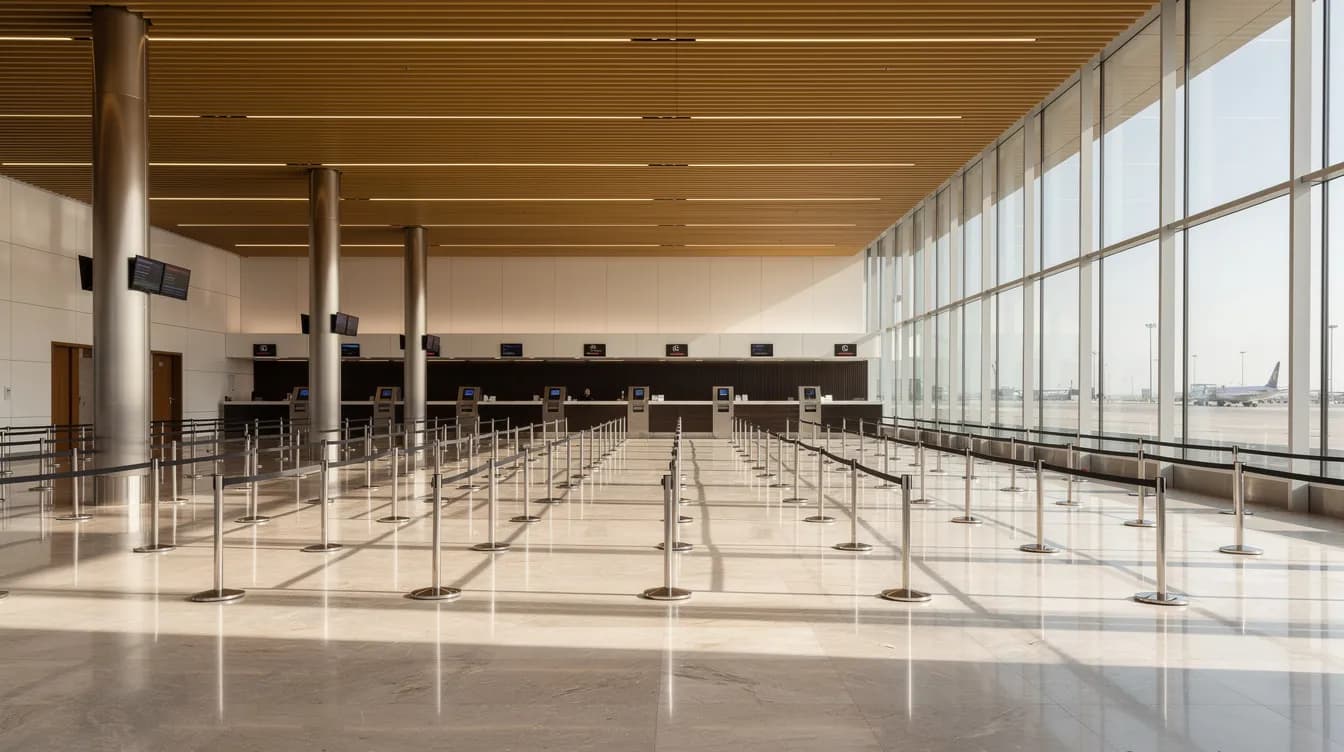
Speeding up passport control is a measurable goal; the airport aims for a '20 minutes in, 20 minutes out' model for passengers. Additional staff should simplify immigration procedures and reduce waiting times, especially during peak periods. This intention is reinforced by a memorandum of understanding signed in April 2026 between the Sharjah Airport Authority (SAA) and the Federal Authority for Identity, Citizenship, Customs, and Port Security.
The collaboration focuses on enhancing service levels, maintaining human resource readiness, and improving passport control efficiency.
A Growing Airport Needs More Capacity
Alongside operational needs, the initiative strongly focuses on Emiratization, or employing local citizens. The goal is to offer UAE nationals job opportunities and clear career paths in aviation, aligning with the broader vision of Sheikh Dr. Sultan bin Muhammad Al Qasimi, the ruler of Sharjah, who approved the plan to employ 3,000 citizens for 2026.
 Naš Biro
Developing and employing talented UAE nationals remains a constant priority for the Sharjah Airport Authority.
The same Executive Council meeting introduced another measure in the same spirit. The 'Khatwa' (Step) initiative was adopted, allowing university and college students to engage in economic activities and develop business ideas. The combination of employment in established sectors and the encouragement of entrepreneurship demonstrates a well-thought-out strategy for Sharjah's future development.
Workforce and Technology
As the number of people at the border increases, technology is also transforming the job itself. In September 2026, SITA launched a new biometric system for processing passengers on the move, designed to speed up immigration checks without physically expanding space.
Dubai introduced a mobile passport control service based on facial recognition in 2026. As Sharjah introduces new officers, the way human judgment and these digital technologies will complement each other becomes a crucial issue, as future roles and passport control efficiency depend on it.
If the state's plan is fulfilled, the airport, which is simultaneously expanding and modernizing technically, could offer faster and more predictable passage through passport control. The challenge remains to train and integrate a large group of new officers into the system at a time when both technology and passenger volume are changing faster than ever.